

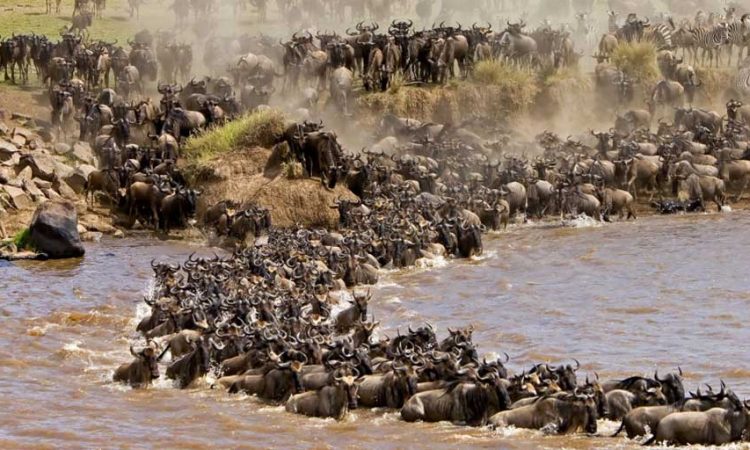
The Great wildebeest migration in Masai Mara widely regarded as one of the most extraordinary wildlife spectacles on Earth. Each year, over a million wildebeest, accompanied by hundreds of thousands of zebras and gazelles, traverse the vast plains of East Africa in a continuous search for fresh grazing and water. This epic journey, driven by seasonal rains and the life cycle of the animals, creates breathtaking scenes of movement, survival, and raw natural drama that attract wildlife enthusiasts, photographers, and conservationists from around the globe.
Spanning the Serengeti ecosystem across Tanzania and northern Kenya, the migration is more than just a display of numbers—it is a complex ecological phenomenon that demonstrates the resilience of wildlife and the interconnectedness of habitats in East Africa.
The Migration Route and Timing
The migration follows a largely clockwise circuit, guided by rainfall patterns and the availability of nutrient-rich grass. While wildebeest are present in the Serengeti plains year-round, the northern movement into the Maasai Mara typically occurs between July and October, coinciding with the dry season in Tanzania. During this period, vast herds cross the border into Kenya, creating some of the most iconic safari imagery in the world.
The return journey begins around October and continues through to June, as the herds follow fresh grazing back south toward the Serengeti. The timing of river crossings and calving events varies slightly each year depending on rainfall, which influences the availability of grass and water.
River Crossings: Life-and-Death Drama
One of the most striking moments of the migration is the crossing of rivers, particularly the Mara River in Kenya. These crossings are fraught with danger: crocodiles lurk in the waters, and the strong currents pose a threat to young calves. The crossings are high-risk, high-drama events that provide some of the most compelling wildlife photography opportunities on the planet.
The Mara River crossings are also ecologically significant. While perilous for the migrating herds, the events support scavengers and predators, creating a temporary but vital food chain. Lions, leopards, hyenas, and vultures take advantage of the concentration of prey, demonstrating the interconnectedness of the ecosystem.
Predator-Prey Dynamics
The migration is a living illustration of predator-prey relationships. As wildebeest and zebras move across the plains, they encounter lions, cheetahs, hyenas, and other carnivores. The constant movement of the herds ensures that predators are challenged to adapt, while the herds’ sheer numbers provide safety in numbers.
This dynamic creates compelling opportunities for safari-goers to witness natural behaviors, including hunting strategies, vigilance, and social interactions within herds. Observing these behaviors adds depth to the safari experience and provides insights into the survival strategies of both predators and prey.
Calving Season: Renewal and Vulnerability
From January to March, the southern Serengeti experiences the calving season, where hundreds of thousands of wildebeest calves are born within a short window. This period is critical for population renewal and ensures the continuity of the migration.
The calving season also influences predator behavior, as lions, hyenas, and other carnivores focus on vulnerable young animals. Bird species, including vultures and eagles, benefit from scavenging opportunities. For wildlife photographers, the calving season offers extraordinary opportunities to capture the intensity and raw emotion of life in the wild.
Optimal Viewing and Safari Experiences
The Maasai Mara is uniquely positioned to offer access to the northern segment of the migration. Game drives in 4×4 safari vehicles, guided walking safaris in private conservancies, and even hot air balloon safaris provide unparalleled vantage points.
The best viewing months for the northern migration in Kenya are generally July through October, when river crossings are most frequent and herd densities peak. Travelers seeking photographic opportunities often plan safaris around sunrise and sunset, when the golden light enhances the dramatic landscapes and wildlife interactions.
Conservation and Ecosystem Significance
The Great Wildebeest Migration is not only a natural wonder but also a critical ecological process. It maintains grassland health, supports predator populations, and enables nutrient cycling across the Serengeti-Mara ecosystem. Conservation efforts by the Kenyan Wildlife Service and Tanzanian authorities help protect migration corridors and critical habitats from encroachment and fragmentation.
Community-based conservation initiatives in the Maasai Mara also play a vital role, as sustainable tourism provides income for local Maasai communities while ensuring that grazing lands and wildlife corridors remain intact. Responsible tourism practices are essential to preserving this natural spectacle for future generations.
Cultural and Economic Importance
The migration has a profound impact on Kenya’s cultural and economic landscape. For the Maasai people, who have coexisted with wildlife for centuries, the seasonal movement of herds is deeply intertwined with traditional grazing practices and local livelihoods. Tourism revenue generated by the migration supports local communities, wildlife protection programs, and national park infrastructure.
The migration also positions the Maasai Mara as one of Africa’s top safari destinations, attracting visitors from around the world and providing educational and research opportunities for ecologists and conservationists.
Conclusion
The Great wildebeest migration in Masai Mara is a living spectacle of survival, resilience, and ecological balance. From the perilous river crossings to the synchronized calving season and predator-prey interactions, it represents one of the most dynamic wildlife phenomena on Earth. For travelers, photographers, and wildlife enthusiasts, witnessing the migration offers not just breathtaking imagery, but also an immersive lesson in the interdependence of life in East Africa. With ongoing conservation efforts and sustainable tourism, this natural wonder continues to thrive, providing a timeless symbol of the wild majesty of the African continent.